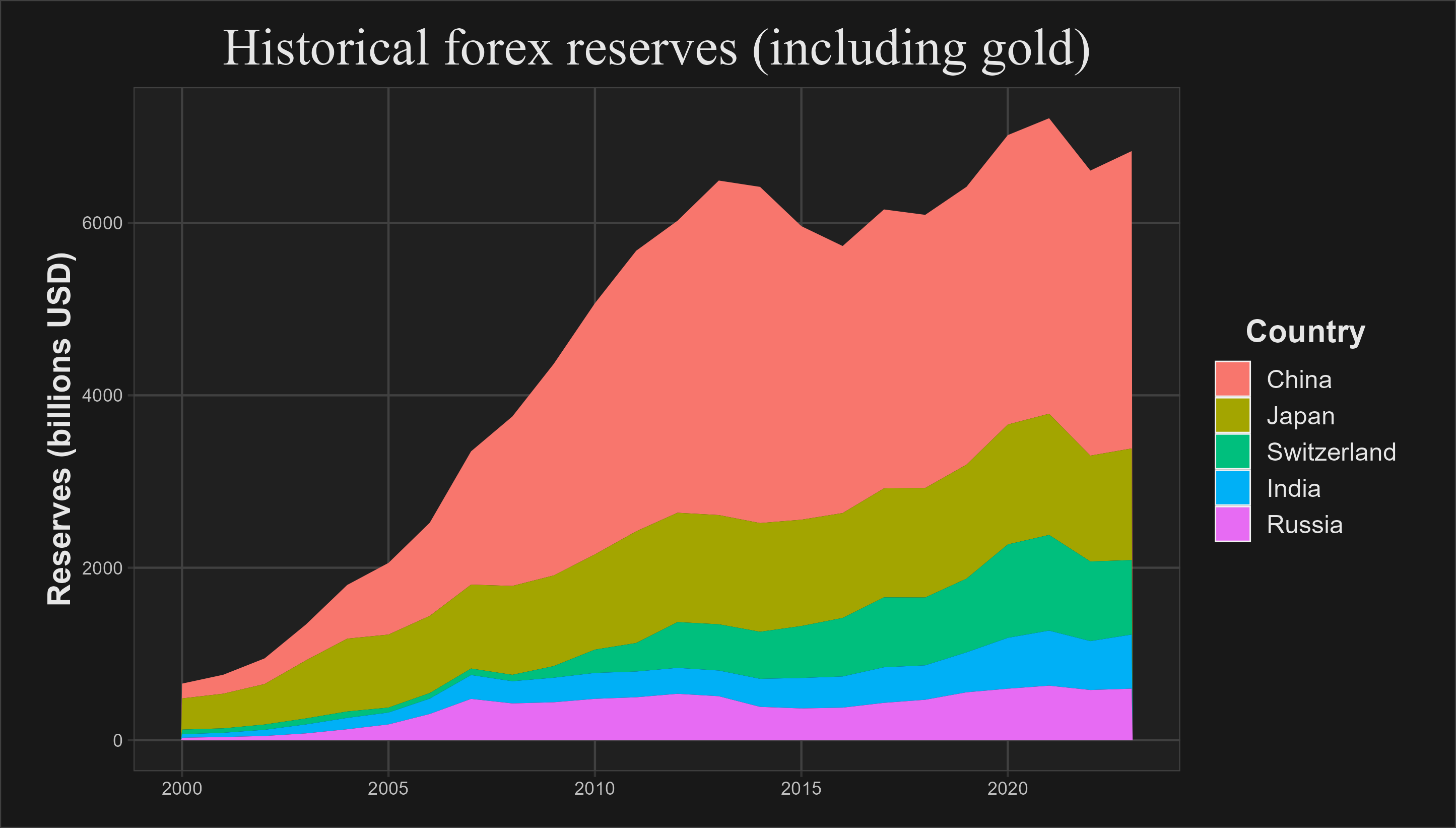
India forex reserves have seen a significant decline, dropping by $1.2 billion to $719.74 billion as of October 24. This decrease raises questions about the country’s economic stability.
Understanding India’s Forex Reserves
India’s forex reserves have witnessed a significant decline, marking the worst drop of $1.2 billion, bringing the total down to $719.74 billion as of October 24. This decrease raises concerns among economists and investors, as forex reserves play a crucial role in stabilizing a country’s economy.
Forex reserves are vital for several reasons:
- Stability: They help maintain the stability of the national currency and protect against external shocks.
- Trade facilitation: Reserves enable countries to manage their import payments effectively.
- Investor confidence: A healthy reserve level can enhance investor confidence in the nation’s economy.
The recent drop in India’s forex reserves reflects various global economic pressures, including fluctuating commodity prices and changes in foreign investment patterns. Understanding these dynamics is essential for anticipating future trends in India’s forex reserves.
Impact of Forex Reserves on Economy
The recent decline in India’s forex reserves has raised concerns among economists regarding its potential impact on the economy. A drop of $1.2 billion, bringing the total reserves down to $719.74 billion, can have several implications.
Firstly, lower forex reserves may affect the country’s ability to manage its currency value. A decrease in reserves can lead to depreciation of the Indian Rupee, making imports more expensive and potentially fueling inflation.
Secondly, reduced forex reserves can hinder India’s capability to withstand external shocks, such as global economic downturns or geopolitical tensions.
Moreover, the decline may influence foreign investors’ confidence, as they often view robust forex reserves as a sign of economic stability. Thus, the impact of the current situation on India’s overall economic health could be significant if the trend continues.
Reasons Behind the Decline
The recent decline in India’s forex reserves can be attributed to several factors that have contributed to the drop of $1.2 billion. Firstly, global economic uncertainties have led to fluctuations in the value of the Indian rupee against major currencies, impacting the overall reserve value. Secondly, increased import costs for essential commodities, such as oil, have strained the reserves as the country continues to navigate through rising inflation.
Additionally, capital outflows due to foreign investors reallocating their portfolios have further pressured the reserves. The Reserve Bank of India has also been intervening in the currency market to stabilize the rupee, which can deplete forex reserves. Finally, geopolitical tensions and changing trade dynamics may have contributed to a cautious approach from investors, affecting the inflow of foreign investments.
These factors combined highlight the vulnerabilities facing India’s forex reserves in the current economic landscape.
Future Outlook for Forex Reserves
The recent drop in India’s forex reserves raises important questions about the future stability of the nation’s economy. Analysts predict that while the decline of $1.2 billion might seem alarming, it could also present opportunities for recalibration and growth.
Several factors may influence the trajectory of India’s forex reserves in the coming months:
- Global Economic Trends: Fluctuations in international markets can affect foreign investment levels, impacting reserves.
- Policy Adjustments: The Reserve Bank of India may implement measures to bolster reserves through strategic interventions.
- Trade Balance: A sustained improvement in trade balance could enhance forex reserves in the long run.
- Foreign Investments: Increased foreign direct investment could provide a buffer against further declines.
In conclusion, the outlook for India forex reserves will depend on a combination of these factors and proactive economic management.
Expert Opinions on Economic Stability
Economists have voiced concerns over the recent decline in India’s forex reserves, noting that a drop of $1.2 billion to $719.74 billion could have significant implications for economic stability. Dr. Anjali Rao, a leading financial analyst, emphasized that such fluctuations can affect investor confidence and the overall market sentiment. She mentioned, “A robust forex reserve is crucial for maintaining the value of the Indian rupee and ensuring the country can meet its international obligations.”
Furthermore, Mr. Ravi Kumar, an expert in macroeconomic policies, cautioned against complacency. He stated, “While the reserves remain at a healthy level, this downward trend signals the need for a strategic approach to bolster our foreign exchange stability.”
Analysts suggest that the Reserve Bank of India (RBI) may need to intervene to stabilize the situation, ensuring that India’s forex reserves continue to support economic growth and resilience.
The recent decline has raised concerns about the stability of India forex reserves amidst global economic uncertainties. Analysts warn that continued drops in India forex reserves could impact the country’s ability to manage its currency effectively.
By Wizmut via Openverse